Quantum Momentum 3608429999 Hyper Prism
The Quantum Momentum 3608429999 Hyper Prism is presented as a modular array of interfaces and phase modulators that reframe control from position to momentum space. Its claims emphasize repeatable, device-like behavior and scalable portability. Skeptics will question reproducibility across setups and the robustness of phase-translation mechanisms under real-world noise. The promise is clear, but the practical boundaries remain unspecified, leaving a cautious path forward for those evaluating its true utility and constraints.
How the Quantum Momentum Hyper Prism Works
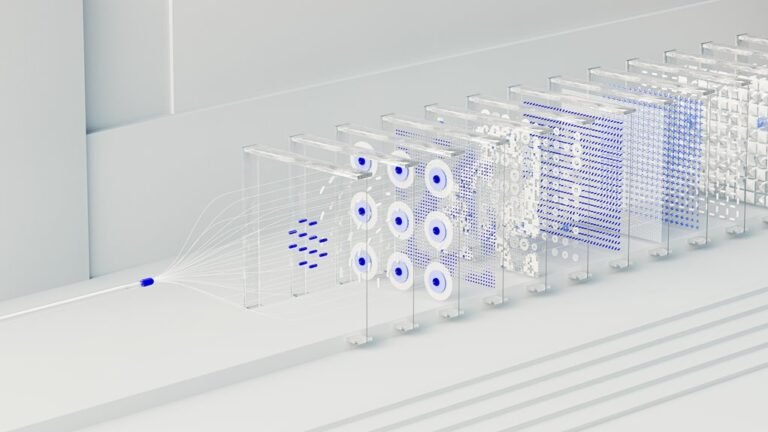
The Quantum Momentum Hyper Prism operates by directing a beam of quantum particles through a carefully engineered array of refractive interfaces and phase modulators, transforming their momentum states in a controlled, repeatable manner.
Momentum engineering enables targeted state shifts, while prism dynamics stabilize transitions.
Skepticism remains about scalability and interpretation, yet the design advocates freedom through transparent, modular parameters and reproducible experimental conditions.
Why Momentum-Space Engineering Matters
Momentum-space engineering matters because it frames how quantum systems are steered without resorting to invasive, position-based controls. It offers an alternative when traditional methods appear overconstrained, yet skepticism remains: reproducibility, robustness, and unintended consequences demand scrutiny. Interactive benchmarking proves useful, while ethical considerations underscore limits on disclosure, experimentation, and governance, ensuring freedom without compromising safety or accountability.
Real-World Applications and Impact
Real-world momentum-space engineering has already informed precision sensing, quantum simulation, and scalable control architectures, translating abstract priors into devices that manipulate quantum states without traditional position-based actuation. In practice, momentum mapping guides measurement schemes, while prism design underpins compact, robust components. Skeptical evaluation remains essential: claimed performances must translate beyond lab demonstrations to reliable, scalable, freedom-embracing applications across fields.
Challenges, Roadmap, and Future Prospects
What remains uncertain as momentum-based methods mature is whether anticipated gains in precision, scalability, and robustness will translate beyond controlled experiments into widely adoptable technologies.
The challenges, experimental hurdles, and evolving theoretical models shape a cautious roadmap.
Skepticism persists about near-term practicality, but steady iterations may illuminate scalable architectures, interoperability, and robust calibration for broader freedom-oriented applications.
Conclusion
The Quantum Momentum Hyper Prism stands as a meticulously engineered lattice of interfaces, a chambered wind returning momentum instead of light. Yet its promise is tethered to calibration as constellations tether stars. Imagery aside, reproducibility and governance remain fragile scaffolds, tested by noise and drift. Skeptics will note that the allure of modular, portable control must prove itself across diverse conditions before widespread adoption. If proven robust, it may refract precision sensing into compact, scalable architectures.